
Our mental health messages are designed for South African mothers. They may be helpful for service providers, family members and service providers in contact with mothers at this time.
We will add to this site over time, as we develop materials and get these translated into different languages.
Please see our different formats for messaging below, feel free to share these widely and to adapt for your setting!
If you are looking for mental health information in other South African languages, such as Sesotho & Sepedi, please visit the M4M website here.
Please feel free to download these infographics by clicking on the images and share on your social media accounts!
Depression, Anxiety and Addiction
How do I cope with depression, anxiety and additions during COVID-19?
 |
 |
 |
 |
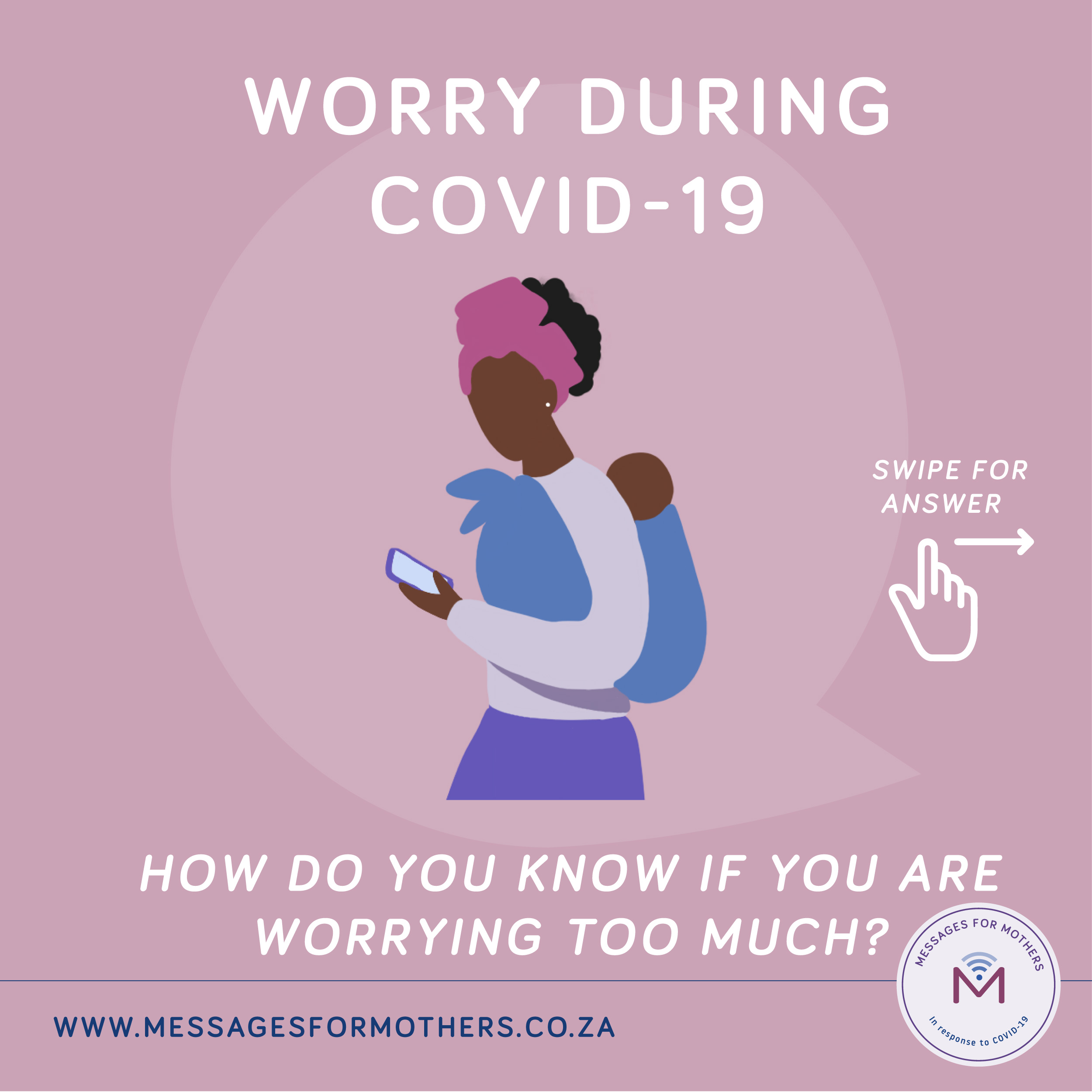
Worry during Covid-19
How do you know if you are worrying too much?
 |
 |
 |
 |
Parents Emotional Health
What can parents do to look after their emotional health?
 |
 |
 |
 |
 |
 |



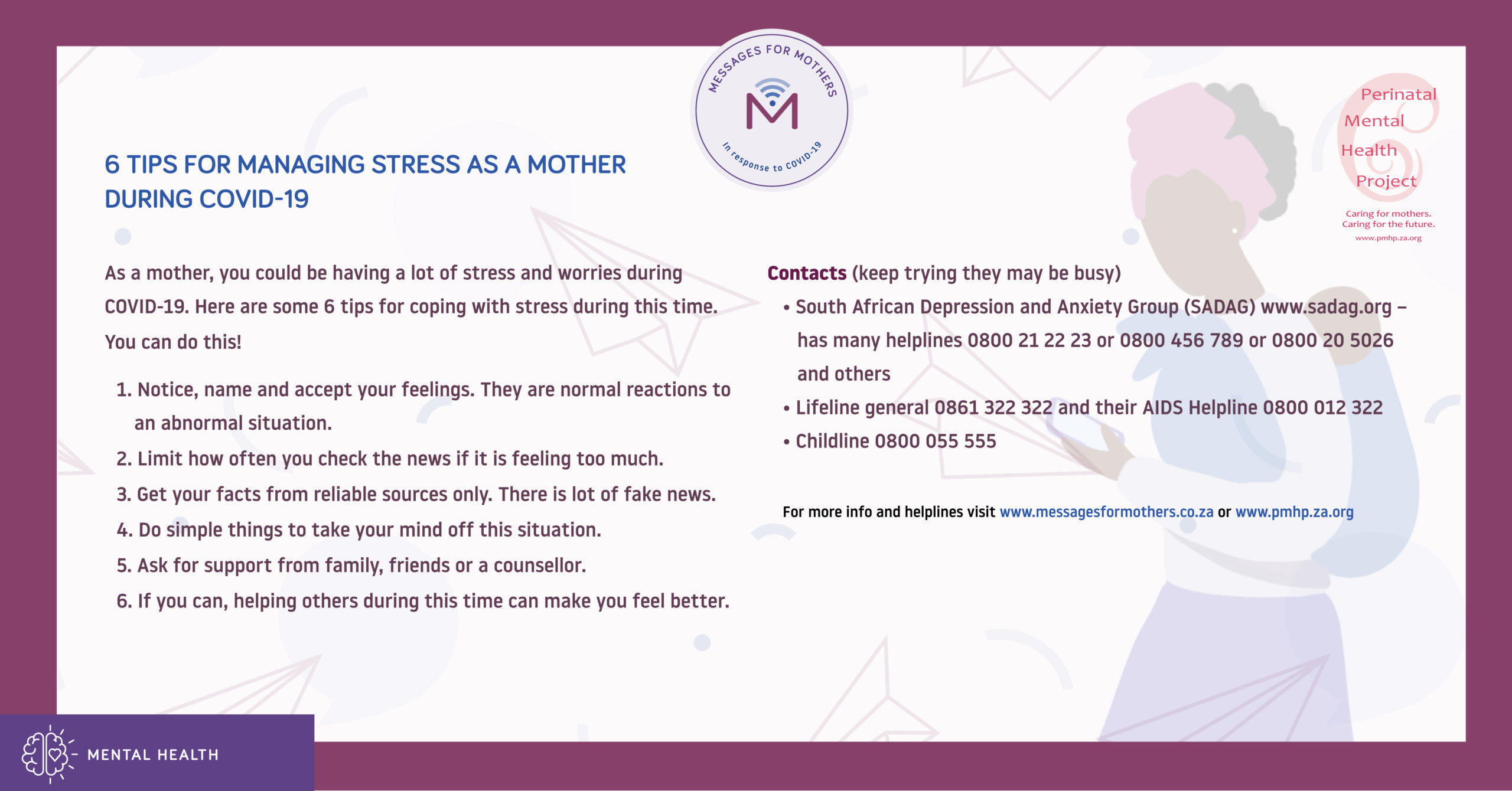


For this year’s #WorldBreastfeedingWeek we want to remind everyone that it takes a village to ensure successful breastfeeding.
If you know a breastfeeding parent, you are a part of the community that can support them on their breastfeeding journey! Please share these images on your social media!




We have developed brief articles on key mental health areas for mothers. This was done in consultation with a psychologist and psychiatrist working in the public health sector in South Africa. The brief messages are a summary of these articles.
Managing depression, anxiety or addictions during COVID-19
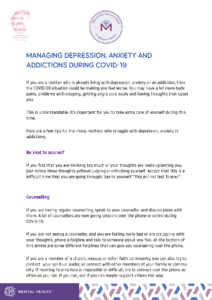
Click on your preferred language to read or download PDF in
English | Afrikaans | isiXhosa
Managing family violence during COVID-19
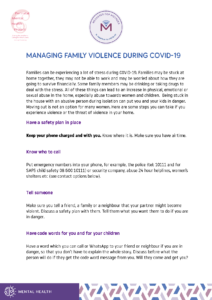
Click on your preferred language to read or download PDF in
English | Afrikaans | isiXhosa | isiZulu
Managing stress as a mother during COVID-19
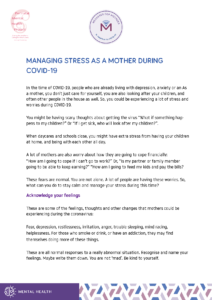
Click on your preferred language to read or download PDF in
English | Afrikaans | isiXhosa
How should I deal with suicidal thoughts during COVID-19

Click on your preferred language to read or download PDF in
English | Afrikaans | isiXhosa | isiZulu | isiSotho
We have recorded podcasts from the mini-articles. These have been condensed for size and uploaded on SoundCloud so they can easily be shared on different platforms. Please click on the image below for your language.
|
In this M4M series, we provide mental health content that is credible, sensitive, relevant and packaged in a way that makes it accessible to mothers all over South Africa. |
Moeders van Suid-Afrika het vrae en boodskappe vir moeders (M4M) sal probeer om hierdie leemte te vul deur antwoorde en ondersteuning te bied vir hul unieke behoeftes. In hierdie M4M-reeks bied ons geestesgesondheidsinhoud wat geloofwaardig, sensitief, relevant en verpak is op ‘n manier wat dit toeganklik maak vir moeders regoor Suid-Afrika. |

|
Lemilayezo ye-M4M inikeza ulwazi yempilo yenqondo eqinisile, ebalulekile, enikeza usizo ngokwengqikithi. Futhi lolwazi utholakala kalula kubomama kuyo yonke iNingizimu Afrika. |
In this M4M series, we provide mental health content that is credible, sensitive, relevant and packaged in a way that makes it accessible to mothers all over South Africa. |


“It is normal to feel sad, stressed, confused, scared or angry during a crisis. Talking to people you trust can help. Contact your friends and family.”
Click on the infographic to get more helpful tips from the World Health Organization (WHO)
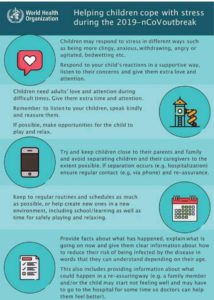
Children may respond to stress in different ways such as being more clingy, anxious, withdrawing, angry or agitated, bedwetting etc.
This WHO infographic helps you to respond to your child’s reactions in a supportive way.
If you are a South African and your home language does not yet appear here, we’d love for you to volunteer to assist us in translating content and recording podcasts. Please fill out this google form.


